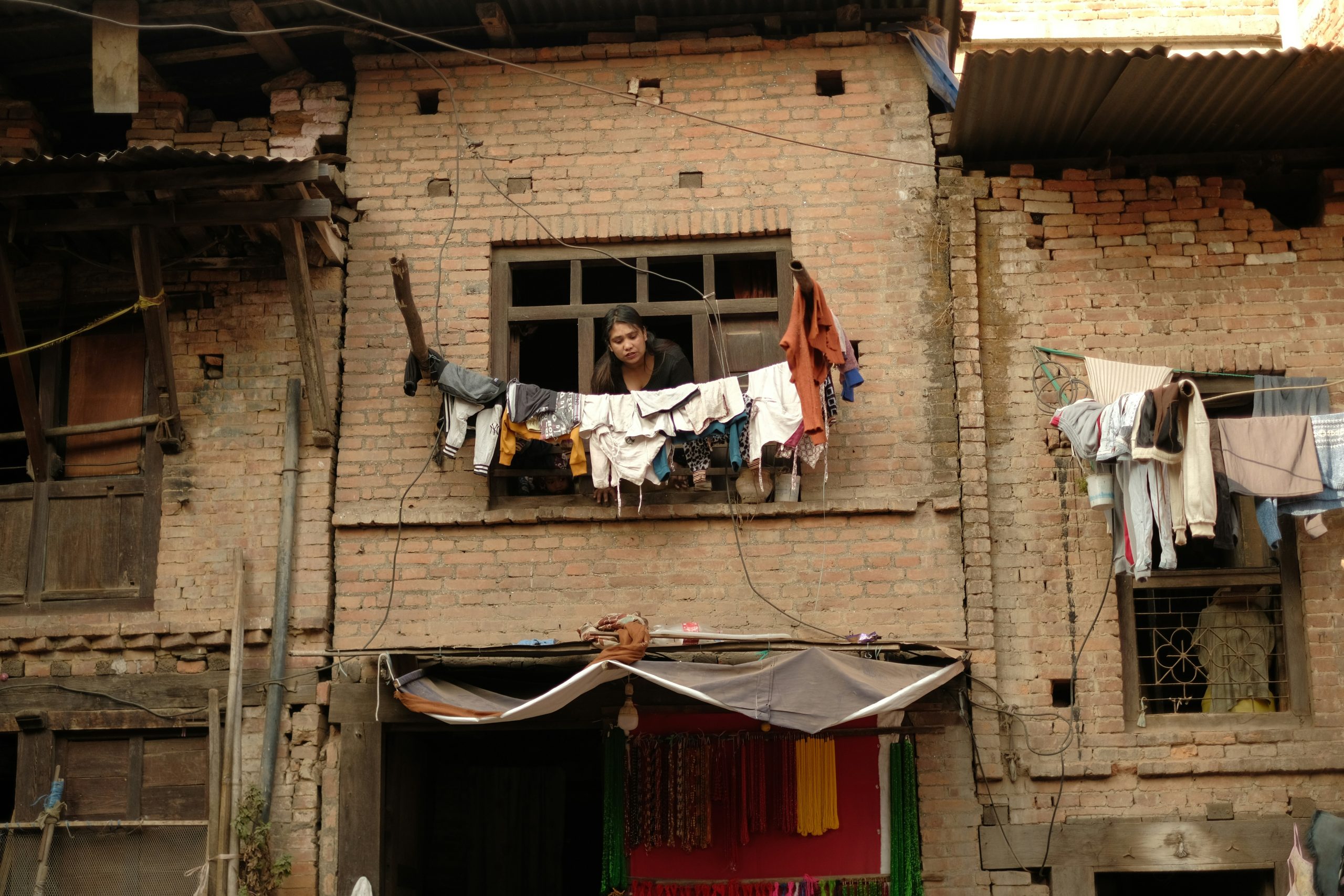
Nepal’s recent evictions of informal settlements have largely been framed as reclaiming of public land, river corridors and urban management. In April 2026, authorities began demolishing riverbank settlements in Thapathali, Gairigaun and Shantinagar. The Kathmandu Valley Development Authority has identified 871 households across these sites[1]; the drive soon expanded to Manohara Teku, Balkhu, Sankhamul[2] and others across the Valley. Estimates of the human toll diverge, official contact figures ran into the hundreds within days, while rights groups later put the total displaced at somewhere around 11,000 people[3]. What isn’t disputed is that this stands as one of the largest state imposed displacements in Kathmandu’s recent history.The official language of eviction reduces the problem to land: who owns it, who has the right to occupy it, whether structures are legal. These are legitimate questions. But there is another, less raised question: what does it mean when a place being demolished is not simply a structure, but a community?
Community Torn Apart
The absence of a land certificate doesn’t mean a structure has no social meaning.A home exists within relationships: the neighbour who watches a child, the shopkeeper who extends credit, the older resident cared for by people who’ve known them for years. These relationships never appear in a land registry, but they make a place a home. .
Reporting from Thapathali put a face to this. One elderly resident who had lived in the settlement since 2001 watched her home torn down alongside her husband and son, both living with disabilities, part of why the family had stayed rather than moving elsewhere to work or rent. Asked where she would go, she said she didn’t know. Here is not an exceptional story in a settlement like this; it is closer to the rule, and a reminder that “informa;” does not mean “temporary.”
A house can be rebuilt. But the networks of care and livelihood built around a settlement cannot simply be recreated by moving families elsewhere.
Who Does the City Belong To?
People in these communities are citizens, workers, parents, students – rooted in Kathmandu for decades if not all their lives, yet legally and spatially insecure. They can belong to a city socially and economically while remaining precarious within it legally.
This isn’t unique to Kathmandu’s riverbanks. Nepal has an estimated 1.2 million landless people nationwide, most settled on public or marginal land for lack of alternatives; at least 19 government commissions have tried and failed to resolve this since 1990. Seen against that backdrop, these evictions look less like a local land dispute and more like the sharp edge of an unresolved national failure.
Language matters here too. Calling people “squatters” or “encroachers” describes a relationship to land, but it also reduces a community to its legal status, turning homes into obstacles and citizens into a problem to be managed. Legal recognition of land cannot be the only measure of human dignity.
Development and the distribution of its costs
Governments must be able to regulate public land. But international standards require strict safeguards where eviction is unavoidable, genuine consultation, adequate notice, and measures against homelessness[4]. Nepal’s Constitution reflects this: Article 37 protects citizens against removal from their residence “except in accordance with the law” and the Rights to Housing Act, 2075 (2018), builds out that framework[5].
The Supreme Court’s own record makes the gap sharp.Its 2024 judgment allowed clearance of public land but required verified alternative arrangements for genuine landless families. That standard was not met before the 2026 demolitions proceeded. Only on 8 May 2026[6], after the largest settlement had already been razed, did the Court issue an interim order barring eviction without due process. The judiciary itself later confirmed the government had failed its own prior legal standard, but only once most of the damage was done.
Relocation becomes displacement
Temporary accommodation can still mean losing everything that made previous housing adequate: schooling, jobs, elder and disability care, affordability, neighbours, community. Reporting in June found displaced children out of school or facing uncertain futures[7]. Resettlements cannot simply mean finding somewhere else to sleep, it must mean rebuilding the conditions for a secure, connected life.
In their July 2026 article examining the state’s approach to the eviction of informal settlements, Raju Prasad Chapagain and Nirajan Thapaliya, both prominent human rights lawyers in Nepal stated,
“If a family is removed from a risky location but is left without housing, its livelihood is destroyed, its children’s education is disrupted, the risk of food insecurity increases, and uncertainty is created around safe and dignified housing, this cannot be called rescue. It is displacement.” – Raju Prasad Chapagain and Nirajan Thapaliya, “उठिबासको ऐनामा राज्यको अनुहार” (July 2026), translated into English.
The right to be heard
People facing eviction are often spoken about rather than heard. Meaningful consultation isn’t a procedural nicety, it’s part of what citizenship means. When communities are treated as obstacles, the question becomes whose voices count in shaping the city.
Nepal can pursue urban development while treating affected people as rights-holders. Regulating land without treating those living on it as disposable. The challenge isn’t only where people should live, but what it means to a city. A bulldozer removes concrete and wood; a cleared settlement can also remove a neighbourhood, a history, a sense of belonging. If housing is a constitutional right, is the State’s duty only physical shelter, or also the dignity that makes shelter a home?
[1] The Kathmandu Post. “Kathmandu Continues Eviction of Riverbank Settlements, 871 Households Identified.” 25 Apr. 2026, https://kathmandupost.com/valley/2026/04/25/kathmandu-continues-eviction-of-riverbank-settlements-871-households-identified
[2] Amnesty International Nepal. “Authorities Must Stop Forced Evictions and Ensure Dignified Resettlement for All Displaced Families.” 26 May 2026,
[3] ESCR-Net. “ESCR-Net Calls on Nepal to Halt Forced Evictions and Uphold the Rights of Sukumbasi Communities.” 15 June 2026, https://www.escr-net.org/news/2026/escr-net-calls-on-nepal-to-halt-forced-evictions-and-uphold-the-rights-of-sukumbasi-communities/
[4] UN Human Rights Council. Basic Principles and Guidelines on Development-Based Evictions and Displacement: Annex 1 of the Report of the Special Rapporteur on Adequate Housing. 5 Feb. 2007, A/HRC/4/18, www.ohchr.org/en/special-procedures/sr-housing
[5] Akashvani News. “Nepal: Show Cause Order over Eviction of Squatter Settlements in Karthmandu Valley.” 28 Apr. 2026 https://newsonair.gov.in/nepal-show-cause-order-over-eviction-of-squatter-settlements-in-karthmandu-valley/
[6] Amnesty International Nepal. “Authorities Must Stop Forced Evictions and Ensure Dignified Resettlement for All Displaced Families.” 26 May 2026,
[7] Ghimire, Binod. “Forced Evictions: For Displaced Children, Returning to School Remains an Uphill Battle.” The Kathmandu Post, 26 June 2026, kathmandupost.com