In Nepal, the struggle to access Sexual and Reproductive Health Rights (SRHRs) is often revealed through personal stories, like the one told by lawyer Dechen Hyolmo Lama. She recalled the case of a 19-year-old woman who became pregnant and decided to have an abortion. Instead of support, she was forced to appear in court and treated as a criminal for her choice. The criminal proceedings also initially included her father and the male pharmacist who had helped her access the medication she needed. Both the men were acquitted for “lack of evidence”. But the woman had to face legal consequences. For Lama, the message was clear: even though Nepal’s Constitution guarantees women the right to make decisions about their reproductive health, it is a challenge to exercise these rights in practice.
Under Nepal’s 2015 Constitution, women are guaranteed the right to safe motherhood, reproductive health, and free access to essential health services. But despite these guarantees, entrenched stigma, limited legal understanding, and cultural taboos add complexity to the situation. As a result, women can face unwanted pregnancies, unsafe abortions, and a denial of basic dignity. But things are starting to shift.
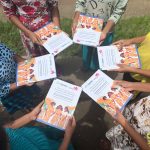
To support this change, iProbono and its partners launched the Legal Design Toolkit as part of the #DesignTheLawNepal initiative, a collaborative effort to make SRHRs easier to understand, discuss and access, especially in remote areas. The toolkit, launched in September 2024, was developed with insights from senior judges, legal experts, medical professionals, and community members. It is now being implemented by the very people who need it most – doctors, lawyers, and community workers. Between April 2024 and 2025, iProbono carried out 30+ outreach initiatives for the toolkit and reached 400+ lawyers, community leaders, and healthcare workers.
Bridging the Gap Between Law and Access
As part of our vision to deliver SRHRs to the widest range of women in Nepal, iProbono trained a network of toolkit ‘ambassadors’, that includes lawyers, medical practitioners, and civil society leaders, who now lead SRHR conversations in their communities.
One such ‘ambassador’ is Sushila Gole of the National Indigenous Women’s Forum. Gole found the toolkit supports her efforts in ensuring indigenous women are able to access their rights. “Reproductive rights … concern women’s rights and reproductive rights are the human rights of women. That’s why whether a woman gives birth, how many children she has, and whether she wants children or not – are all matters that fall under women’s human rights”.
For Dr Niharika Khanal, the resource’s simple language and vibrant illustrations are key in breaking down complex legal information into accessible, relatable material.
Dr Khanal works at Nuwakot Hospital and is a board member at Youth Led SRHR Advocacy Nepal (YoSHAN). Having been involved with the development and implementation of the toolkit since the early stages of the project, she found that it had empowered her to initiate difficult conversations. “When people hear the word ‘sexuality’ or ‘sex’, it’s still a taboo. They’re very reluctant to share, and it’s difficult to even start that conversation,” she said.
Through the toolkit, Dr Khanal has changed this dynamic in her hospital. She creates a safe space by asking other staff to step out before discussing reproductive health. “You first make them comfortable, then talk about it. When they ask for the service, you explain it using the toolkit,” she said.
By creating a sense of trust and empowered decision making, Dr Khanal utilises the toolkit in supporting more women to seek care. Her methods are now inspiring other colleagues to do the same.
Rights on Paper vs Reality on the Ground
As mentioned earlier, Nepal’s Constitution guarantees SRHR as a fundamental right. Article 38 promises every woman the right to safe motherhood and reproductive health. Article 35 ensures free basic health services, including reproductive care, for all citizens. Abortion is legal on request up to 12 weeks and up to 28 weeks in cases of rape, incest, or health risks. Yet, these laws are inconsistently applied and often misunderstood.
Advocate Dechen Lama, who often works with women’s rights cases, noted that the issue isn’t just legal, it’s cultural. “If a woman is pregnant before marriage and seeks an abortion, she is viewed differently. So the stigma and the taboo attached to abortion is still quite prevalent in the Nepalese context.”
That’s where she found the toolkit’s personas to be helpful. From Ful Kumari, a rape survivor afraid to speak out, to Sangita B K, who suffers from uterine prolapse in silence, each persona reflects the lived experiences of Nepali women. These stories, says Lama, allow community members to see their own stories embedded in the material, helping break the stigma and silence that has long surrounded SRHR.
Tools That Spark Change and Conversation
Advocate Anurag Subedi, who also contributed to the toolkit’s development, has a deeply personal reason for his involvement. “My grandmother used to suffer from uterus prolapse,” he said. “It was hard for her to talk about it. But when I knew that (such issues) come under the ambit of law… I thought that I could be a voice for them.”
These stories are not isolated instances but reflect the structural barriers and injustices faced by women.
Saraswati Sherpa, Program Manager at Support Nepal, an organisation working for the rights of marginalised and indigenous communities, also found that the toolkit’s illustrated personas were especially impactful. Like Lama, she found that the story of Ful Kumari, a young office worker raped by a colleague and too afraid to report it, resonated deeply. Many women said they had experienced something similar or knew someone who had. This shows the toolkit’s intersectional approach and reflects the inputs we incorporated from a wide range of stakeholders.
For women from rural communities who may struggle to understand legal language or their rights, she noted, the toolkit’s visual and accessible format made it an empowering resource.
A Model for Rights-Based Innovation
The Legal Design Toolkit is part of iProbono’s wider SRHR efforts in Nepal under the #DesigntheLaw Nepal project, an initiative to realise the Economic, Social, and Cultural Rights (ESCR) of Nepali citizens. The project was led by Mara Malagodi (School of Law, University of Warwick), together with Emily Allbon and Sabrina Germain (City Law School, University of London), iProbono, and the Law and Policy Forum for Social Justice (LAPSOJ), with financial and technical support from Advocates for International Development’s ROLE UK Programme and UKAid. Illustrated by renowned Nepali artist Kripa Joshi, the project brings together legal experts, artists, and community advocates to make complex legal processes accessible and actionable.
The impact of the Legal Design Toolkit shows how tools like these enable women and communities to better understand their rights and feel supported to act on them. By empowering local voices and making the law more accessible, iProbono is helping to build a future where dignity, justice, and equality are within everyone’s reach.